Review by Jon C. Stott
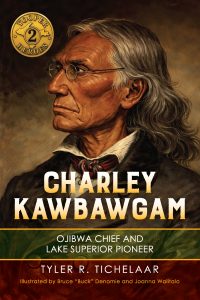 Writing a biography for young readers is a challenge. Much of the life chronicled covers the subject’s adult years, many aspects of which may be beyond readers’ comprehension. When the subject is from another culture, the challenges increase because the social and spiritual milieu in which the subject has lived differs from that of many.
Tyler R. Tichelaar, an award-winning Upper Peninsula novelist and historian, has successfully faced these challenges in Charley Kawbawgam: Ojibwa Chief and Lake Superior Pioneer, the second book in the “Yooper Hero”series. The subject’s life spans most of the nineteenth century, when social and economic forces radically impacted the lives of the Anishinaabe people who had called the land their home for many centuries.
Born in the early decades of the nineteenth century (he did not know the date of his birth), Kawbawgam grew up in Sault Ste Marie (in what is now Michigan) and lived for several years in what is now northern Ontario before moving back to the Sault and then to the Marquette area, where he would spend the rest of his life.
During Charley’s lifetime, cataclysmic changes occurred. The Americans (Tichelaar’s term for white people) advanced across the peninsula in a quest for iron and copper ores and for land ownership. It was a time when the rights and cultural values of the Ojibwa (a Lakota Sioux name for the Anishinaabe people) were not respected and were frequently crushed.
Tichelaar portrays Kawbawgam’s life against this historical background. It was not an easy life. The Ojibwa weren’t treated as second-class citizens – they weren’t even citizens. Charley, the author notes, suffered many sorrows, not the least of which was the infant mortality of many children. He showed a good heart by adopting both Native and American children and helping Americans when they were in need. In his role as chief of the Marquette area Ojibwa, He worked for his people and to improve relationships between them and the new controllers of the land.
 Tichelaar provides a valuable portrait of what it must have been like for a Native person to hold onto his cultural and personal beliefs in the face of such overwhelming forces. One way the author does this is by posing three or four questions after each chapter. The questions ask young readers to consider how they would have felt in Kawbawgam’s situation.
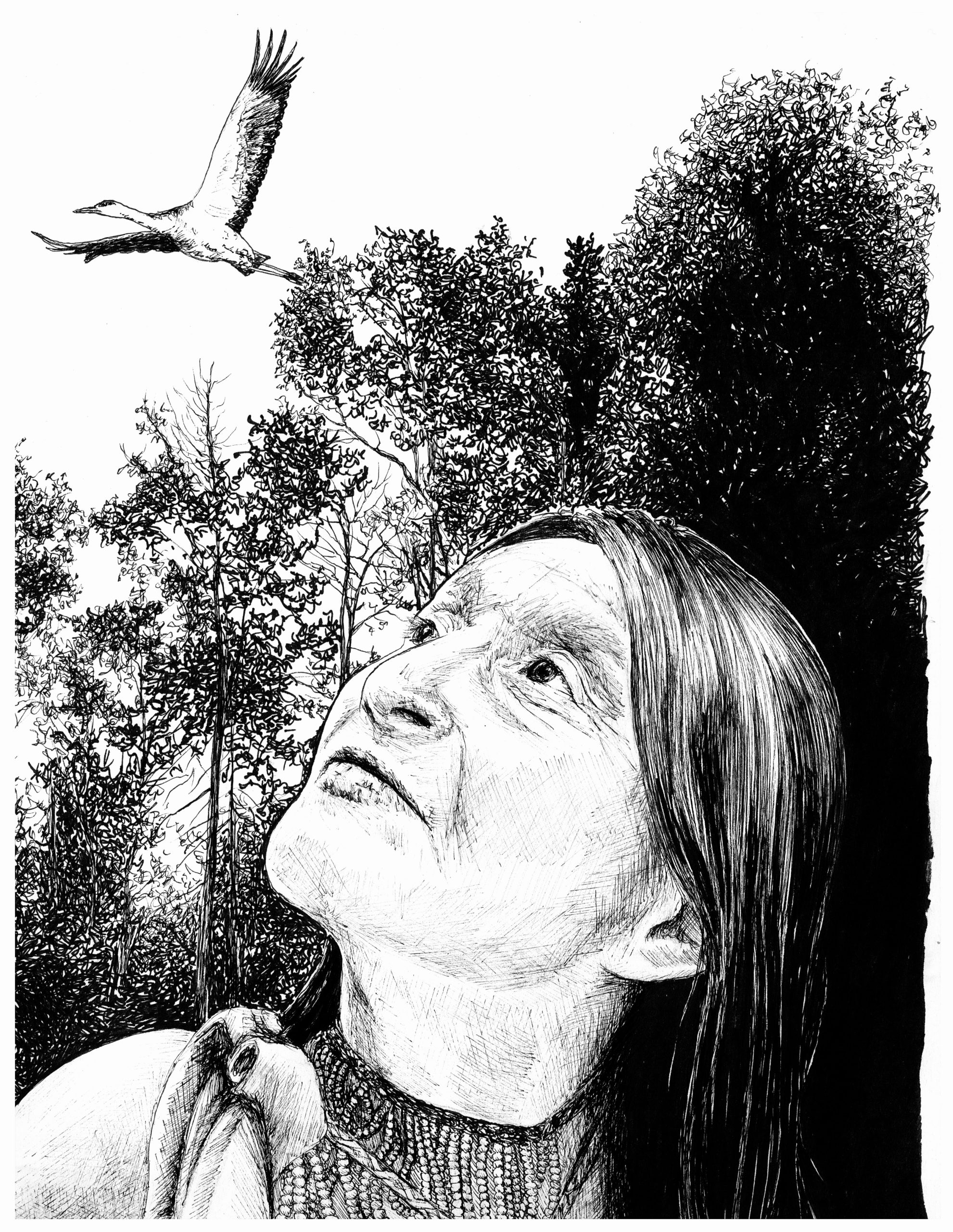
In addition to the easy-to-follow narration of his subject’s life and background, Tichelaar includes other materials that expand and enrich the narrative for children and adult readers. Along with the discussion questions, each chapter includes historically accurate pen-and-ink sketches. There is a Kawbawgam family tree, maps showing the travels of the Ojibwa people and Charley himself, and a list of suggested writing projects.
Engaging in these suggested activities during and after reading the main text will enlarge readers’ understanding of the subject, the land, and the times. In Charley Kawbawgam: Ojibwa Chief and Lake Superior Pioneer , Tyler R. Tichelaar has succeeded in meeting the challenges facing the creator of the life-story of a little-known, but nonetheless important Yooper Hero.
–Jon C. Stott, author of Native Americans in Children’s Literature.
Tyler R. Tichelaar; Bruce “Buck” Denomie and Joanna Walitalo, illustrators
Charlie Kawbawgam: Ojibwa chief and Lake Superior Pioneer
Ann Arbor, MI: Modern History Press, 2026.