Reviewer: Sharon Brunner
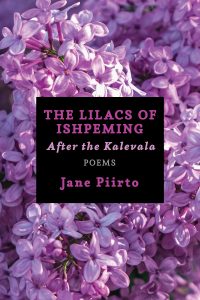 Jane Piirto’s The Lilacs of Ishpeming: After the Kalevala (Poems) offers a colorful view of the author’s Upper Peninsula roots and her Finnish heritage. Ishpeming is a town in the western portion of the Upper Peninsula of Michigan (U.P.), approximately 15 miles from the town of Marquette, a town put on the map by a famous Ojibwa chief, Charley Kawbawgam, and Peter White (a man who wore many hats, and the town’s library is named after him). Robert Nelson is known as the founder and original proprietor of Ishpeming. People settled the area after discovering rich iron ore deposits in the Marquette Iron Range during the 1840s. It was originally called the Lake Superior Location when it was founded in 1854 and officially renamed Ishpeming in 1862. The name comes from the Ojibwe word for “high place” or “summit.” U.S. mining companies recruited European workers, including Finnish immigrants, to work in the mines. Extreme rural poverty, land shortages, and devastating crop failures caused thousands of Finns to leave their homeland for steady work abroad. The transition to the foreign land was made easier because the U.P. and Finland had similar terrain and climate. Piirto tells the story of Finnish immigrants who moved to the U.P. from their homelands through her delightful poems.
One of the main themes was the importance of fond memories of people, places, the U.P., and Finnish heritage. Piirto describes sauna experiences with an aunt and young girls, cousins. The girls competed to see who could stand the hottest, a timeless tradition the aunt did as a girl. Saunas have been used in Finland for many years. Two of my friends recently visited family in Finland, and one told me about sitting in a sauna with his family. The author mentions her grandparents and how they lived in Finland or the U.P. A grandmother toiled running a boarding house for pulp cutters, ore dock men, and railroaders at her U.P. home. She wrote about her father, who was a welder, and how he built their sturdy home from metal and iron. “Iron lasts, even with rust.” Piirto describes her family’s Lake Superior Circle Tour, where they explored rivers and falls such as Laughing Whitefish Falls. The U.P. has some of the most beautiful waterfalls. Thousands visit Tahquamenon Falls annually.
I can relate to this book in many ways. First, my husband and I recently went on a road trip to Munising to see the falls. There are five of them in that beautiful U.P. community. Piirto was born and raised in Ishpeming and has lived in the U.P. I have lived in the U.P. all my life. I was born and raised in St. Ignace, and I moved to Sault Ste. Marie during the early 1990s. My memories of my grandparents include cinnamon rolls, large gardens, homemade rag rugs, farm animals like pigs and cows, and berry picking, to name a few. A long-held U.P. tradition was pasties, and my mother owned a pasty shop. Pasties were meat pies with a crust, created to feed miners during the 1800s. Like Piirto, I treasure my heritage and have spent countless hours exploring my ancestors’ past.
The book that came to mind when reading this book was “Bloodstoppers and Bearwalkers: Folk Traditions of Michigan’s Upper Peninsula” by Richard Dorson. Michigan’s U.P. is known for being remote and rugged, with a variety of indigenous peoples and old-world immigrants. Bears, wolves, coyotes, and, on occasion, cougars roam the woods. Approximately 84% of the land is covered in forests, 8.8 million acres out of 10.5 million total acres. The Ojibwe, Potawatomi, and Odawa, along with other tribes, have lived in the vast wilderness surrounded by rivers and lakes. The U.P. has a heritage deeply rooted in what is called “Yooper” territory. The term “Yooper” represents a U.P. resident. French Canadians, Finns, Cornish, Poles, Italians, Slovenians, and others have lived in the U.P. Mining, timber, and fishing drew many to this neck of the woods. The Yoopers blended local happenings with supernatural tales and creatively adapted traditional stories to suit their audiences. Dorson presents the folk narratives of the region’s loggers, miners, lake sailors, trappers, and townsfolk.
I recommend The Lilacs of Ishpeming: After the Kalevala (Poems) for its endearing views of the past, its connection to mystery, wonder, and awe through a variety of senses, and its portrayal of generations of women. The author uses the term “Kalevala,” which refers to a series of folk poems and songs collected from the Finnish countryside. Her last poem in the book appears to be in Finnish. Piirto engages the reader’s senses through vibrant colors, the smell of fall apples cooking, swimming in the cold Lake Superior, drinking strawberry pop after a sauna, and hearing the calls of northern wildlife. I like listening to the birds through the open windows during the summer months. Women of various ages toiled hard in boarding houses, swam in Lake Superior, and enjoyed a hot sauna. Piirto brought to life the beauty and history of Ishpeming, its bluffs, lakes, and decommissioned iron ore mines.
Title: The Lilacs of Ishpeming: After the Kalevala Poems
Author: Jan Piirto