Reviewer: Sharon Brunner
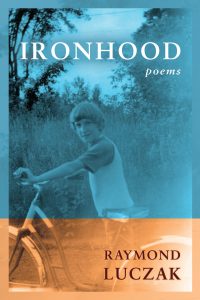 Raymond Luczak’s book Ironhood: Poems recalls neighbors, neighborhoods, shopkeepers, his mother, past events, and places associated with the town of Ironwood, Michigan, a Gogebic Iron Range community. Ironwood is a town located in the western portion of the Upper Peninsula of Michigan (U.P.). The town was founded in 1885 and incorporated in 1889 as a premier mining town following the 1882 discovery of iron ore by James “Iron” Wood. The town became prosperous with the rail expansion, coupled with a booming industrial center consisting of a multitude of deep-shaft mines. Later on, the focus of the town became logging and tourism in the 20th century. Raymond Luczak was born and raised in Ironwood, where his father served as a butcher at a local market. Luczak brought up in a colorful and detailed manner many fond and difficult memories in this book.
A theme that presented itself in the book was the importance of past memories. These memories have been essential for shaping personal identity, guiding future behavior, and providing emotional comfort by giving people a sense of belonging. Memories have preserved everyone’s legacy and acted as a bridge between the past, present, and future. Luczak accomplished all of the above with this book. He brought back a memory of rolling an old tire down a hill and how his group of friends learned about death by that experience. He fantasized about flying in an airplane when his father drove through close quarters on a road. Luczak had eight siblings, and they were all crammed in a car during that excursion. As a child, I often fantasized that I could fly like a bird. Luczak reminisced about the times he felt he was a foreigner in his own home because he was the only member of his family who was deaf.
As Van Kley said in her testimonial on the back cover, he was suffocatingly known in the small town but at the same time intimately estranged. Are other senses more pronounced when one sense has been compromised? Luczak seemed to paint clear pictures of walking at night and what he saw. Pamida discount stores still exist in the western portion of the U.P. I know of one in Munising. Luczak described visiting a Pamida store and how he longed to purchase vinyl records there, and in a town with no museums, the album covers dazzled him.
This book has brought up a lot of thoughts and memories for me. Luczak noticed a lot of his surroundings when he was growing up in a small community. I was born and raised in St. Ignace, Michigan, and I remember noticing many things while being raised in a small town. Luczak brought up a situation in which a person who ran a store may have lived in quarters connected to the store. I was raised in the same situation. My parents owned and operated a small grocery store and gas station, and we lived behind the store. My father inherited the store from his parents. I ended up being very good at math and very comfortable around people, many of whom were strangers. Our time was often not our own if the store was busy. To this day, I thoroughly enjoy my quiet home. As far as feeling like a freak, I was taller than my friends and felt out of place because of my height. Luczak mentioned feeling like he did not belong. The last chapter in this book brought up a lot of feelings about what legacy my parents passed down to me. Luczak learned to be a ghost, silent and seething, from his mother.
The book that came to mind when reading this book was Luczak’s book “Compassion, Michigan” which was about Ironwood’s history and geography. The town’s expansion was due to immigrants populating the area. The aforementioned book covered Ironwood’s founding after the discovery of iron ore, it’s booming days during two world wars, and the eventual decline. The term “Yoopers” has been used to describe the inhabitants of the U.P. and the unique qualities of where they grew up. I am considered a bona fide “Yooper” since I have lived in the U.P. all my life. The movie that came to mind concerning this book was a 1982 documentary by Michael Loukinen called “Finnish American Lives” which defined a three-generation Finnish family in the Ironwood area. This documentary highlighted immigrant culture and mining town life.
I recommend Ironhood: Poems for its candid honesty about life, its walk down memory lane, its entertaining stereotypes, and for its exploration of what it is like to grow up in a small town. A woman who colored her hair orange and wore colorful clothing was someone who gave him something to look forward to and got him through the tough times in his life. What would aliens visiting Earth think of the people living there? The clothes we wear, how dogs behave, dizzying heights of snow, and capitalism, and how it affects the environment. He explained how he liked seeing things growing in his garden, which I can relate to. I love seeing plants grow from seeds into vegetables. Definitely small-town thinking. Most people who live in cities in tall apartment buildings probably cannot relate to vegetable gardens. Luczak captured the vast amount of feelings, sights, and experiences of people who live in small towns, especially in the U.P.
Title: Ironhood Poems
Author: Raymond Luczak