Reviewed by Jeffrey M. Holden
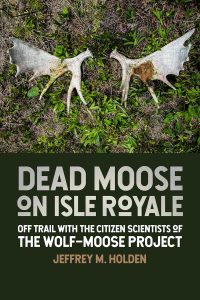 Dead Moose on Isle Royale is certainly a book that delivers on the promise of its title. When U.P. historian and conservationist Mikel B. Classen first recommended Holden’s book to me, I must admit I shelved it without even picking it up—which is hardly fair! After all, followers of my Superior Reads column in Marquette Monthly will no doubt remember my discussion of Dr. L. David Mech’s Wolf Island: Discovering the Secrets of a Mythic Animal in the February 2025 issue. I am happy to report that I am indeed glad I picked up Dead Moose on Isle Royale because it makes the perfect companion book to Mech’s Wolf Island—even if most of my relatives assumed I was reading a murder-mystery potboiler! In a sense, they weren’t all wrong and indeed Holden gives the moniker Crime Scene Investigations (“CSI”) for each moose death scene they encounter. Mech’s book describes how the professional scientists crisscross the narrow 50-mile-long island in the Aeronic Champion—an airplane capable of level flight at speeds as slow as 38MPH—marking the locations of moose kills with a GPS for later recovery. Most of those recoveries it turns out, are handled nowadays by the citizen scientist corps, who volunteer a single week each summer for some extreme off-trail backpacking.
Jeffrey M. Holden has been associated with the Wolf-Moose Project since 2002, when he first volunteered to look for dead moose on the island. He was quickly promoted to be a “group leader” – a sort of den-mother for a given weeklong sortie—and he has led at least one group every year since 2005. As president of the Wolfe-Moose Foundation, a non-profit whose mission is to advance the research and education that promotes the conservation of predators and their prey, he is eminently qualified to write this definitive story of the life and death of moose on Isle Royale. Holden even prepares and packs group dinners for each of his outings to make the experience that much easier on the participants.
You might well ask, who are these so-called “citizen scientists” and aren’t they just providing free labor for the work of the professionals? The fact remains that the Wolf-Moose project simply could not provide the depth of information it does about life-and-death on a island that is 210 square miles without dozens and dozens of people combing the difficult “off trail” experience to find, catalog, and classify remains as well as returning major artifacts, such as jaws and antlers, that tell us how a given moose lived and died. There simply aren’t enough wilderness biology grad students in a five-hundred mile radius of Isle Royale to make it happen. Thus the volunteers have a unique niche in this ecobiological study of unprecedented proportions spanning more than three decades. The volunteers come from all walks of life—from college students to retirees and from first-time off-trail “bushwhackers” to extreme hiking enthusiasts, and as Holden writes: “to hike, get dirty, sweat, get bitten by bugs, get rained on, and to trudge through swamps and over ridgelines to look for dead moose—And they enjoy doing it.” The author’s wry sense of humor keeps the book light and never turgid, and ever-true to its title.
Dead Moose on Isle Royale basically alternates brief 4 to 8 page chapters from focus on the theory and practice to anecdotes from Holden’s 20 years of leading groups off-trail—with fun chapter titles like “Boneheaded Volunteer Tricks” and “What I Have in My Backpack for the Week”. Although there is a very practical focus on how to survive off-trail for a week at a time that can apply to many remote hikes, the book can be seen alternately as a training manual for potential Wolf-Moose Project volunteers and a subtle recruitment for those who have the inclination and stamina to participate. Certainly, for those desiring to take their outdoors experience to the next level, the challenge of a week successfully navigating to places few have ever seen before could be its own reward.
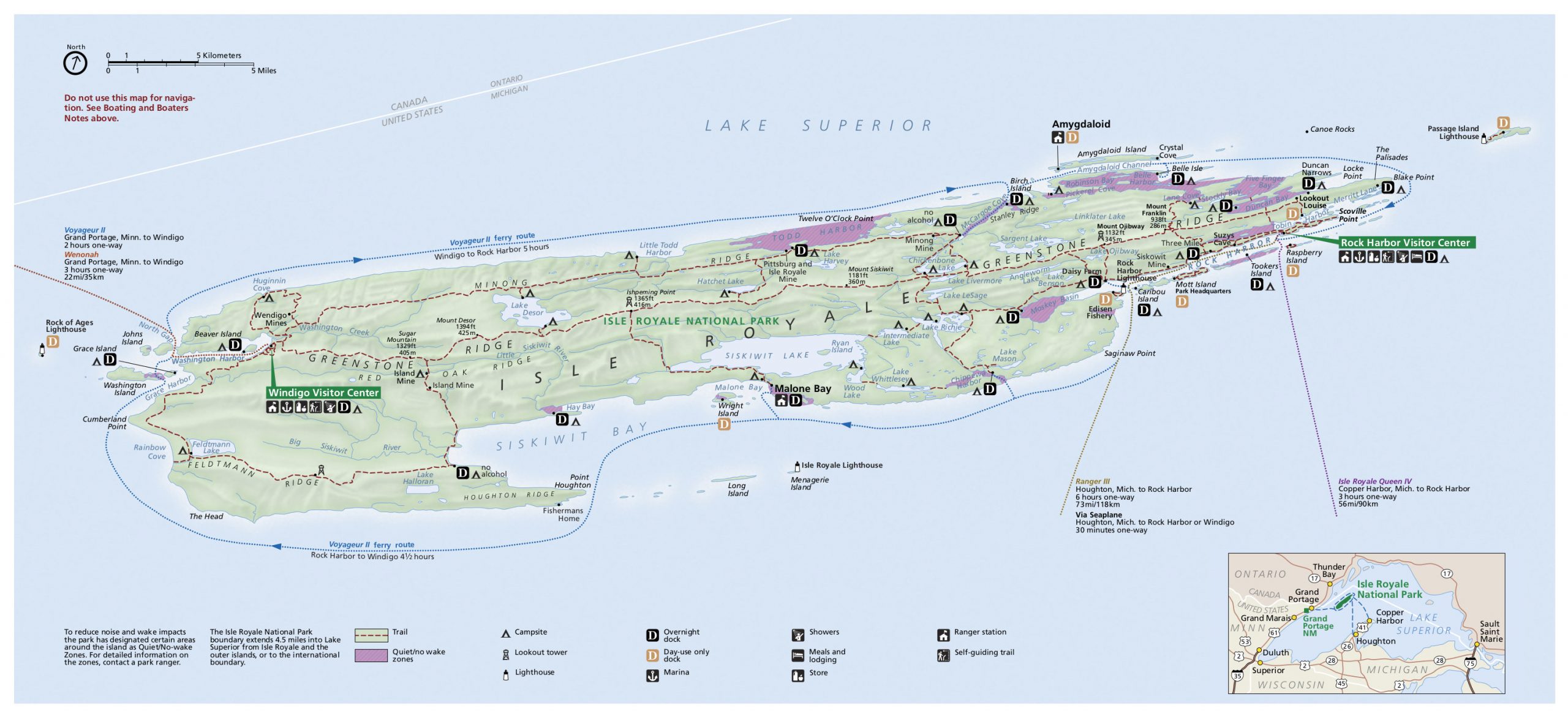
After the initial boat ride to Rock Harbor on the far northeast corner of the island, small groups are then shuttled in smaller groups by another boat to Bangsund Cabin. The pre-fashioned groups are then given unique mission briefings by Rolf and Candy Peterson in preparation to striking out on their own. These missions consist of a specific route designed to hit perhaps 8 to 12 waypoints where a moose carcass or remains thereof is believed to be sitting. Sometimes things get very strange, as in one site where as many as five moose had been dismembered and their remains so scattered that a concentrated effort was required to reassemble them. Never squeamish, Holden provides graphic details on what a moose might appear like in various stages of decomposition, often with a thick crust of ticks in place. One particularly memorable scene involves two of the guys stripping off their shirts as they get close in to do the dismembering of a recently deceased moose—the better to aid in tick spotting after completion! For a relatively “fresh” kill, the first order of business is decapitation so as to get at the jawbones and teeth, which will tell a story about the quality of life of a moose.
Just as a dead moose hunt runs but a single week, so have I run out of room in this column. There’s so many more tales of adventure in the book, including backwoods rescues from broken bones, the rise and fall of wolfpack genes, a TV crew coming to film the “discovery” of a dead moose, lists of must-have and must-avoid accessories, wolf-tracking by radio collar (harder than it sounds), and so much more. I give “two antlers up” to Dead Moose on Isle Royale–whether you’re a doughty off-trail adventurer or someone like me who only went off-trail when they get lost on MTU’s Orienteering course, there’s something for everyone who cares about the complex web of nature that is never more than a mile from your doorstep in the U.P.